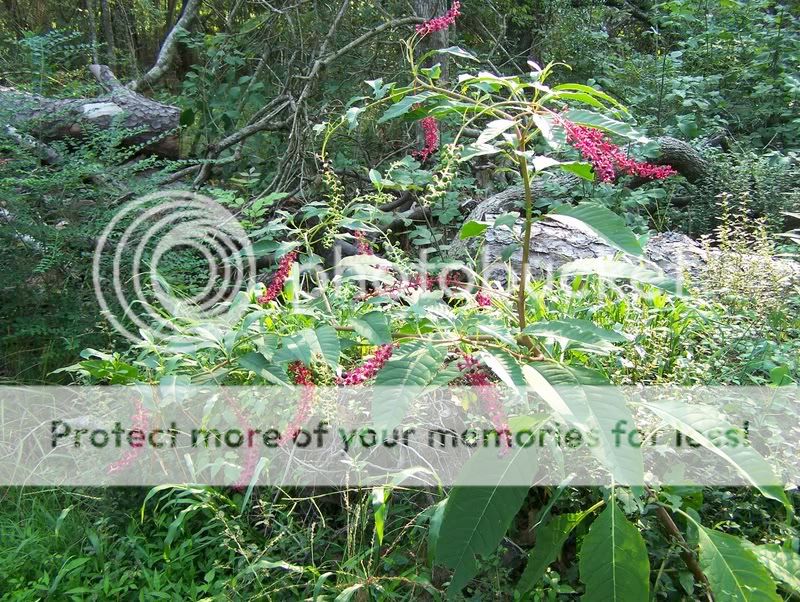
Pokeweed is a large herbaceous perennial that dies back in winter and resprouts every spring. It produces large lance-shaped leaves up to a foot long. The plant itself can become very large (8-12 feet) but I've never seen it over 6 foot. By summer, the stems turn an intense red and the plant produces hanging bunches of berries. Although they may look enticing, the berries are poisonous to humans. The young shoots however were eaten in the old days and made edible by boiling in several changes of water.
Showing posts with label forbs. Show all posts
Wednesday, September 9, 2009
Phytolacca americana
Phytolaccaceae
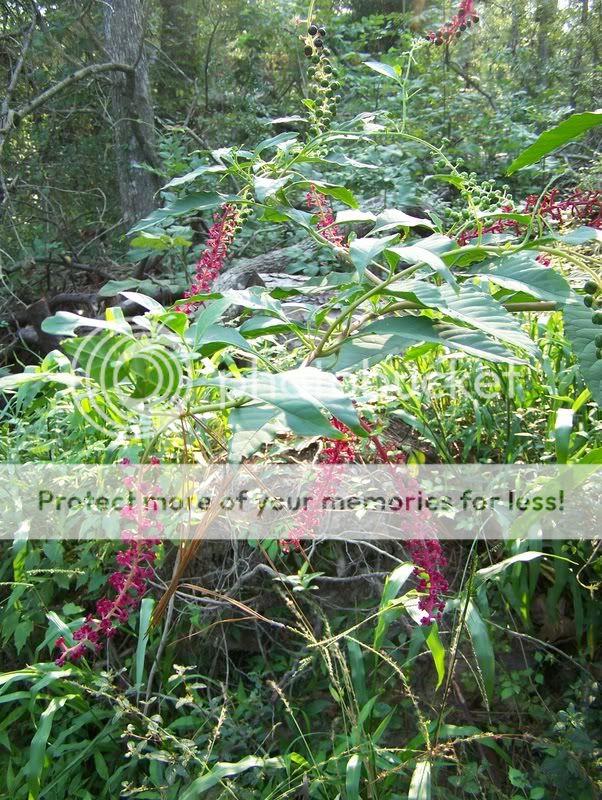
Pokeweed is a large herbaceous perennial that dies back in winter and resprouts every spring. It produces large lance-shaped leaves up to a foot long. The plant itself can become very large (8-12 feet) but I've never seen it over 6 foot. By summer, the stems turn an intense red and the plant produces hanging bunches of berries. Although they may look enticing, the berries are poisonous to humans. The young shoots however were eaten in the old days and made edible by boiling in several changes of water.

Pokeweed is a large herbaceous perennial that dies back in winter and resprouts every spring. It produces large lance-shaped leaves up to a foot long. The plant itself can become very large (8-12 feet) but I've never seen it over 6 foot. By summer, the stems turn an intense red and the plant produces hanging bunches of berries. Although they may look enticing, the berries are poisonous to humans. The young shoots however were eaten in the old days and made edible by boiling in several changes of water.
Conoclinium coelestinum
Asteraceae
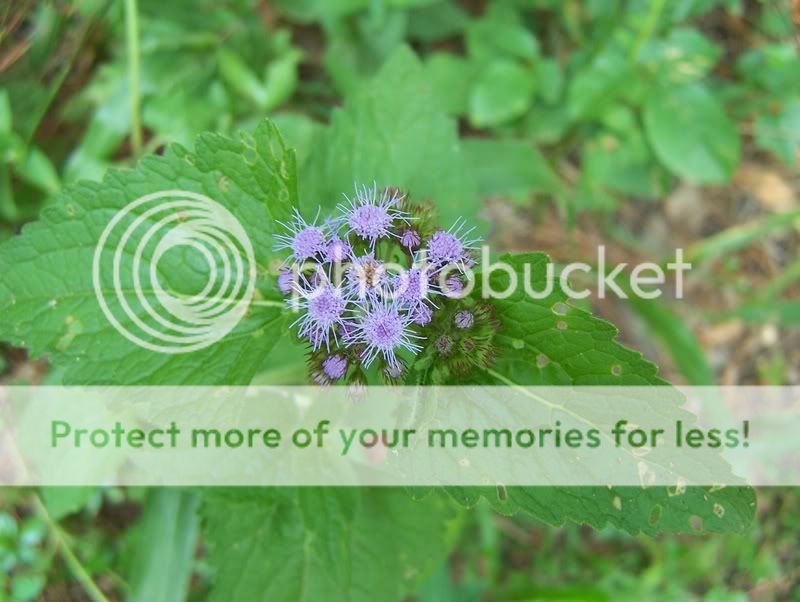
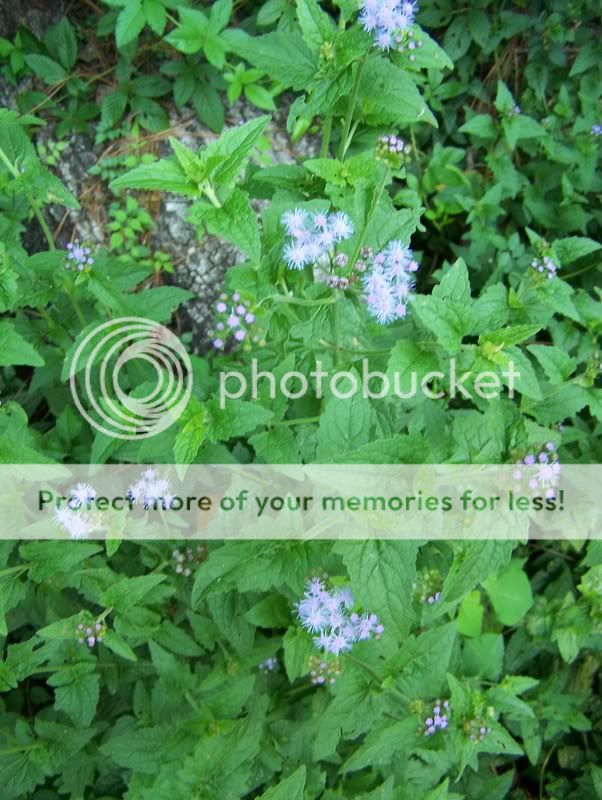
Mistflower is a native composite found all over the eastern half of Texas. It's a rhizomatous perennial that puts out pretty powder-blue flowers in late summer/fall on 1 to 2 foot stems. It's very similar and related to the common bedding annual Ageratum which is native to South America. The leaves are fragrant when crushed.

Mistflower is a native composite found all over the eastern half of Texas. It's a rhizomatous perennial that puts out pretty powder-blue flowers in late summer/fall on 1 to 2 foot stems. It's very similar and related to the common bedding annual Ageratum which is native to South America. The leaves are fragrant when crushed.
Wednesday, September 2, 2009
Hypericum hypericoides ssp. hypericoides
Clusiaceae
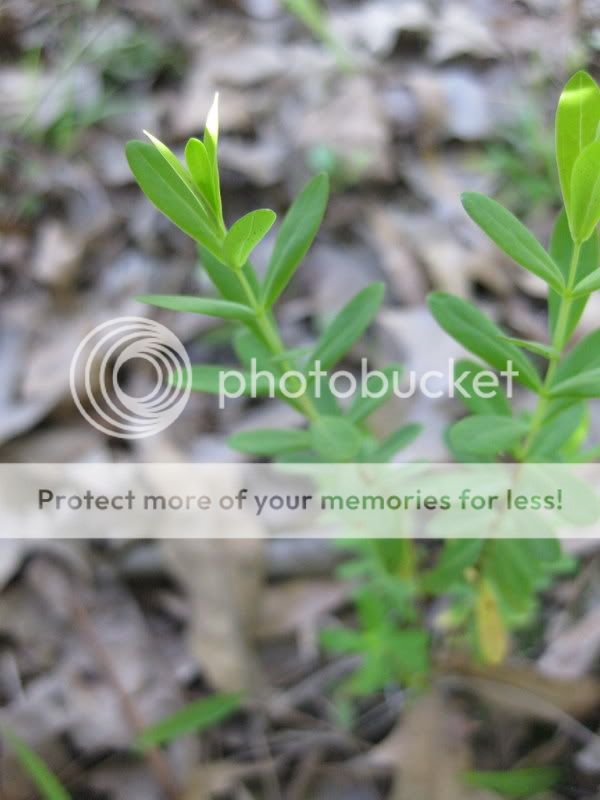
This member of the St. John's Wort family is known as St. Andrew's Cross. It's a small shrub, no more than a couple feet in height and diameter. In spring, the young shoots are easily identified by their paired, opposite leaves which grow at right angles to eachother around the stem. They also tend to have a bluish cast to them. In summer, small yellow flowers appear with four petals, creating St. Andrew's Cross.

This member of the St. John's Wort family is known as St. Andrew's Cross. It's a small shrub, no more than a couple feet in height and diameter. In spring, the young shoots are easily identified by their paired, opposite leaves which grow at right angles to eachother around the stem. They also tend to have a bluish cast to them. In summer, small yellow flowers appear with four petals, creating St. Andrew's Cross.
Sunday, April 12, 2009
Dicliptera brachiata
Pyrrhopappus carolinianus
Juncus effusus
Juncaceae
Members of the family Juncaceae are called rushes. They look a lot like grasses but only memebers of the family Poaceae are true grasses. You might also confuse rushes with sedges which are members of Cyperaceae. Like most sedges, rushes grow in and around water. Juncus effusus is a perennial rush whose hollow stems grow up to 3 feet tall. The flower heads appears along the stems. It's native all over the Northern Hemisphere.
Subscribe to:
Posts (Atom)